Latest / HuMed with David Spiro, MD
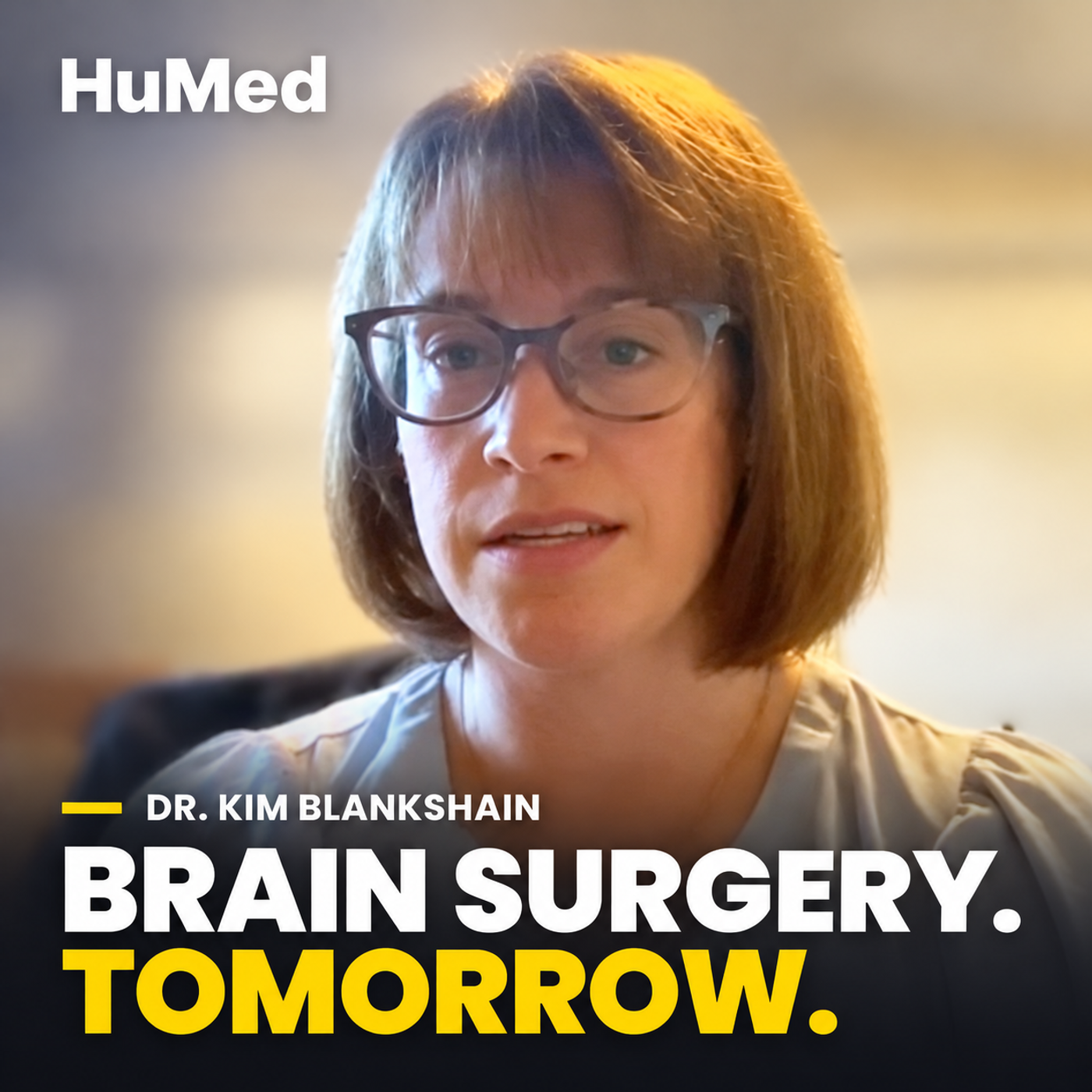
Neuro-Ophthalmologist Dr. Kim Blankshain: "What Is Happening?" Her Husband's Brain Surgery
A Monday morning, 6:45. Dr. Kim Blankshain is changing her infant son when she hears a crash in the next room. Her husband is sitting on the edge of the bed, bleeding from a gash in his forehead. She expects a few stitches. Hours later an ER physician says the CT scan came back and he is being sent downtown to see neurosurgery right away. "What is happening?"
Dr. Blankshain is a neuro-ophthalmologist in the Chicago suburbs, a specialist in vision problems that begin in the brain and nervous system. She was in fellowship, trained to read MRIs and CTs, when the scan on the screen was her…
Read the full description
husband's: an epidermoid cyst pressing on his brainstem, and brain surgery set for the next morning. She joins Dr. David Spiro to talk about being the doctor in the waiting room, and how it changed the way she delivers bad news to her own patients.
In this episode:
- Why knowing the medicine made it harder, and the moment the neurosurgeon asked, "What do you do for a living?"
- The waiting-room buzzer three hours into a four-to-six-hour surgery: "That can't be good"
- Receiving bad news as a physician: "I wasn't really hearing what he was saying"
- How she gives hard news now: slow down, say it more than once, and sit in the silence
- Going back to work the day after her husband came home, with her time off for the year already used on six weeks of maternity leave
- Parental leave in medical training, and why she calls the culture "cruel"
- Working-mom guilt and the "have it all" lie: "Something has to give on any given day"
- Marriage after a baby: feeling like roommates, a year of couples therapy, and TV-free Thursdays
- What she tells pre-med students: "It's still just a job"
Dr. Spiro also shares how he gives bad news to families in the pediatric ER.
Chapters
00:00:00 "What is happening?"
00:00:20 Meet Dr. Kim Blankshain
00:01:50 What a neuro-ophthalmologist does
00:02:22 A crash in the next room
00:04:10 The ER and the CT scan
00:06:08 Rush University: the MRI and the neurosurgeon
00:07:27 "What do you do for a living?"
00:08:14 Brain surgery, tomorrow
00:08:53 The waiting room: "That can't be good"
00:09:43 Six weeks of recovery
00:10:13 How it changed the way she sees patients
00:11:45 On the other side of bad news
00:13:04 Slow down, repeat it, sit in silence
00:14:17 Dr. Spiro: bad news in the pediatric ER
00:15:25 "You are so lucky that you came to me"
00:16:36 Back to work the next day
00:19:41 Parental leave in medical training
00:22:43 Balance with a five-year-old
00:23:58 The "have it all" lie
00:24:39 On call on the Fourth of July
00:26:37 "It's still just a job"
00:27:50 Marriage after a baby
00:29:23 Couples therapy and TV-free Thursdays
00:32:33 Why she believes in therapy for physicians
00:33:44 "Nobody says that to a mechanic"
00:34:08 Why she reached out to HuMed
00:35:31 Closing
Check out the Inside HuMed Newsletter: https://www.humedpod.com/inside-humed
This episode is one physician's personal story and is not medical advice.
If this episode meant something to you, follow HuMed on Apple Podcasts and send it to one colleague who needs to hear it.
Short listen plan
No short plan yet. We need saved quotes in chapters with known start and end times, backed by a timed transcript.
The skinny
The skinny isn't ready yet — the transcript is, and you can read it now.
David: The ER physician comes in and says, So your CT scan came back and we have to send you downtown to see neurosurgery and get an MRI right away. And I was like, What is happening? Hello, everyone. Welcome to another episode of Humed, where we unveil the HUMED side of medicine. I am your host, Dr. David Spiro. I am a professor of pediatric emergency medicine at Arkansas Children's Hospital and UAMS. I'm incredibly honored and delighted to… continue reading